Regenerative medicine represents one of the most exciting frontiers in modern healthcare. Rather than masking symptoms with medications or replacing damaged tissues with artificial implants, regenerative approaches harness your body's own healing mechanisms to repair, regenerate, and restore function at the cellular level.
What Is Regenerative Medicine?
Regenerative medicine encompasses therapies that stimulate the body's innate repair processes. At its core, the field recognizes that the human body possesses remarkable self-healing capabilities that can be amplified and directed through medical intervention. The most established and widely available regenerative therapy is Platelet-Rich Plasma (PRP).
Understanding PRP Therapy
Platelet-Rich Plasma is derived from your own blood. A small sample is drawn and processed in a centrifuge to concentrate the platelets — tiny cell fragments that contain hundreds of growth factors, cytokines, and bioactive proteins essential for tissue repair.
When this concentrated plasma is injected into damaged or aging tissue, it triggers a cascade of healing responses including accelerated tissue repair and regeneration, new blood vessel formation (angiogenesis), collagen synthesis stimulation, reduction of inflammation, and recruitment of stem cells to the treatment area.
PRP Applications at BKB Medical Center
At BKB Medical Center, we utilize PRP therapy across multiple clinical applications. For musculoskeletal conditions, PRP injections can address osteoarthritis (knee, hip, shoulder), tendon injuries (tennis elbow, Achilles tendinopathy), ligament sprains, muscle tears, and chronic joint pain.
For aesthetic rejuvenation, PRP is used in facial rejuvenation (the "vampire facial"), hair restoration for thinning hair and alopecia, under-eye rejuvenation, neck and décolletage renewal, and hand rejuvenation.
For sexual wellness, PRP-based treatments can address erectile dysfunction in men and sexual dysfunction in women through targeted regenerative protocols.
The PRP Procedure: What to Expect
The PRP process is straightforward and typically completed in under an hour. First, a small blood sample (usually 30-60ml) is drawn from your arm. The blood is then processed in a specialized centrifuge for 10-15 minutes to separate and concentrate the platelets. The treatment area is prepared with local anesthesia for comfort. Finally, the concentrated PRP is precisely injected into the target tissue using ultrasound guidance when needed.
Most patients experience minimal downtime. Mild soreness at the injection site is common for 2-3 days. Results develop gradually over 4-12 weeks as the growth factors stimulate tissue regeneration.
Evidence and Efficacy
PRP therapy is supported by a growing body of clinical research. Studies have demonstrated significant improvement in knee osteoarthritis symptoms compared to hyaluronic acid injections, accelerated healing of chronic tendon injuries, enhanced hair density in androgenetic alopecia, and improved skin texture and collagen density in aesthetic applications.
While PRP is not a miracle cure for all conditions, it offers a safe, minimally invasive option that leverages your body's own biology for healing.
Who Is a Good Candidate?
Ideal candidates for PRP therapy include patients with mild to moderate joint degeneration who want to delay or avoid surgery, athletes or active individuals with soft tissue injuries, patients experiencing hair thinning who want a natural approach, individuals seeking facial rejuvenation without synthetic fillers, and patients who prefer minimally invasive treatments with minimal downtime.
PRP vs. Traditional Approaches
Traditional treatments for joint pain often rely on corticosteroid injections, which provide temporary relief but may actually accelerate cartilage breakdown with repeated use. PRP offers a fundamentally different approach — instead of suppressing inflammation temporarily, it promotes actual tissue repair and regeneration.
For aesthetic concerns, PRP provides natural-looking results because it stimulates your own collagen production rather than adding foreign substances. The results are gradual and long-lasting.
Our Regenerative Medicine Protocol
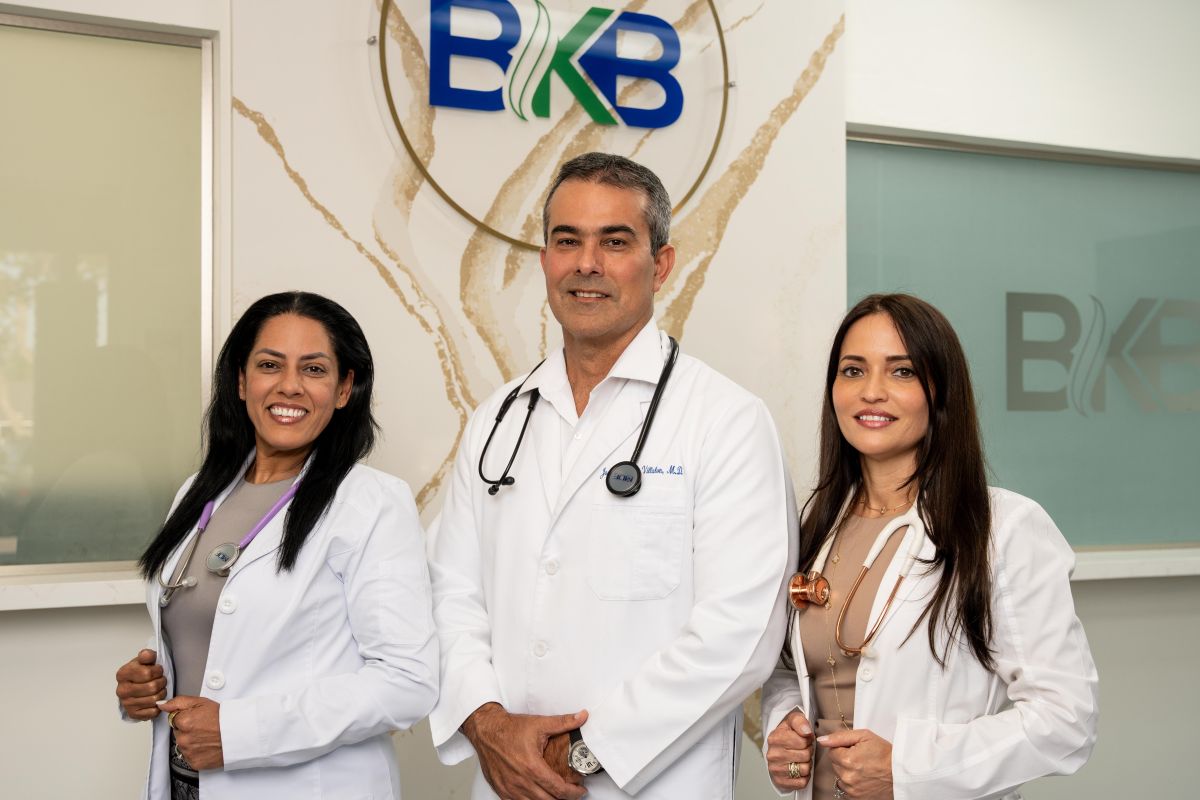
Dr. Juan L. Brito Villalon, MD, brings extensive experience in regenerative medicine to every treatment protocol. Our approach includes thorough evaluation to determine if PRP is appropriate for your condition, advanced preparation techniques to maximize platelet concentration, precision injection using imaging guidance when indicated, and follow-up protocols to optimize results.
Explore regenerative medicine at BKB Medical Center. Schedule a consultation to learn how PRP therapy can help your body heal naturally and effectively.